Saddam Hussein: The Rise and Fall of a Modern Dictator
Saddam Hussein: The Rise and Fall of a Modern Dictator
Saddam Hussein remains one of the most controversial and consequential figures in modern Middle Eastern history. His rule over Iraq, marked by authoritarianism, brutal wars, and eventual downfall, has left an indelible mark on the geopolitics of the region. Understanding the trajectory of his life provides critical insight into the complex history of Iraq and the broader dynamics of international relations in the late 20th and early 21st centuries.
Early Life and Entry into Politics
Born on April 28, 1937, in the village of Al-Awja, near Tikrit, Saddam Hussein grew up in a harsh environment. He was raised by his uncle, Khairallah Talfah, an Arab nationalist who deeply influenced his political views. This early exposure to nationalist ideology fueled his ambition, leading him to join the Ba'ath Party in 1957, a revolutionary socialist movement that advocated for Arab unity, freedom, and socialism.
Saddam quickly gained a reputation within the party for his ruthlessness and organizational skills. In 1959, he participated in a failed assassination attempt against Iraqi Prime Minister Abd al-Karim Qasim, forcing him to flee to Syria and later Egypt. During his years in exile, he continued his education and deepened his involvement with the Ba'ath Party, laying the groundwork for his future return to power.
The Seizure of Power
Saddam Hussein's rise to absolute power was a calculated and often violent process. After the Ba'ath Party seized power in a 1968 coup, Saddam, acting as the deputy to General Ahmed Hassan al-Bakr, systematically purged rivals and consolidated control over the military and security apparatuses. By the mid-1970s, he was effectively the de facto ruler of Iraq, long before he formally assumed the presidency in 1979.
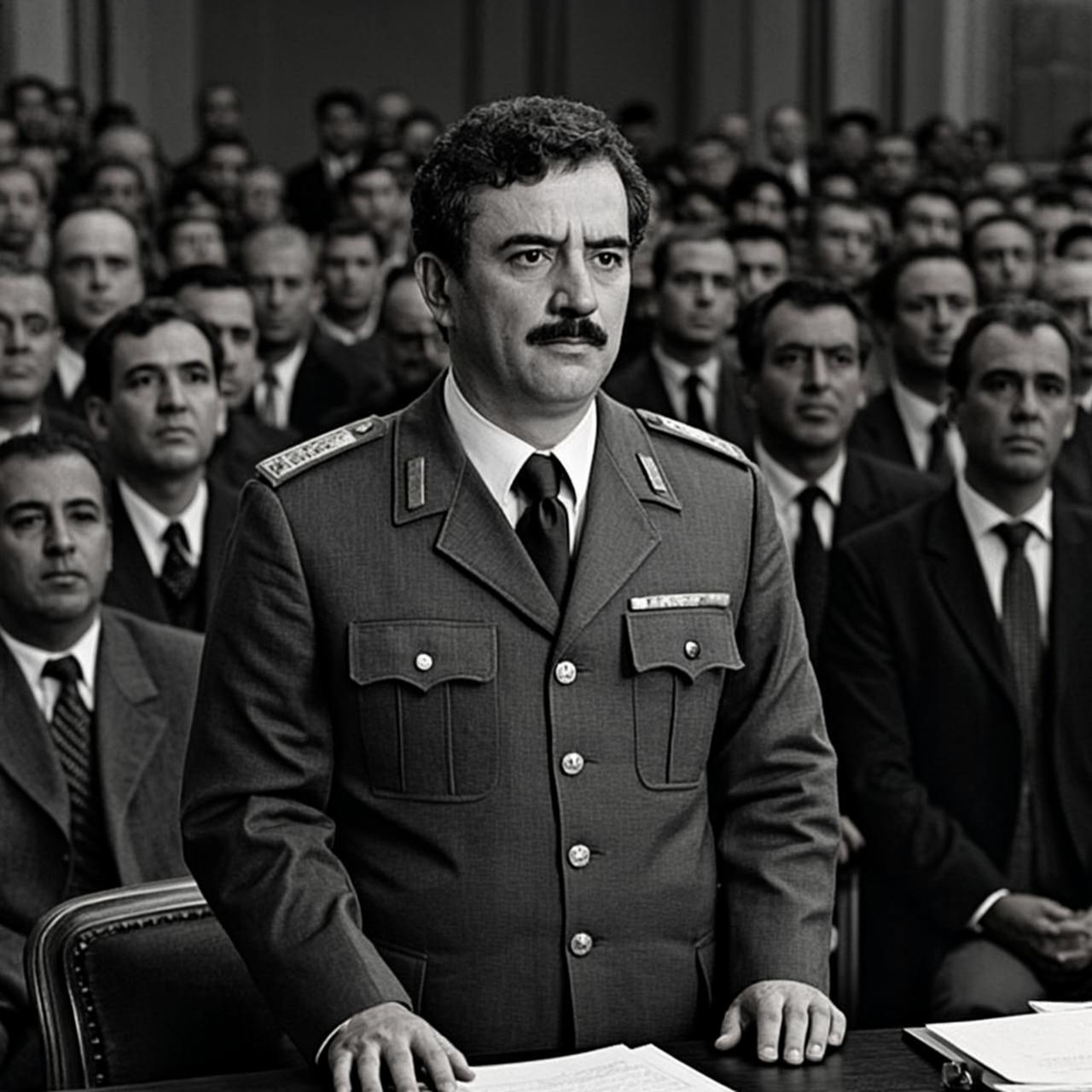
Upon assuming the presidency, Saddam immediately moved to secure his position. In a chilling televised conference, he convened Ba'ath Party leaders and announced the discovery of a conspiracy against the state. As names were read, members were dragged away, signaling the beginning of a regime defined by fear and paranoia. This event solidified his grip on Iraq and demonstrated his willingness to use extreme violence to maintain authority.
The Iran-Iraq War
One of the defining events of Saddam's rule was the Iran-Iraq War (1980–1988). Fearing the spread of the Islamic Revolution in Iran, which threatened his secular regime and Iraq's oil-rich borders, Saddam launched a full-scale invasion. He anticipated a quick victory but was met with fierce resistance, resulting in a protracted and bloody conflict.
The war devastated both economies and caused an estimated one million casualties. Iraq received significant financial and military support from Western nations, including the United States, who viewed Iran as the greater threat at the time. The conflict ended in a stalemate with a UN-brokered ceasefire, leaving Iraq deeply indebted and with a massive, battle-hardened military.
The Invasion of Kuwait and the Gulf War
Blaming Kuwait for Iraq's economic troubles, including allegations of slant-drilling across the border, Saddam ordered the invasion of Kuwait in August 1990. This act of aggression triggered an international response, leading to the First Gulf War. A US-led coalition launched Operation Desert Storm in January 1991, utilizing overwhelming air power and ground forces to liberate Kuwait within weeks.
The defeat was catastrophic for the Iraqi military, but Saddam managed to retain power. In the aftermath, the UN imposed strict sanctions on Iraq, leading to severe economic hardship for the Iraqi population while the regime remained intact. This period also saw the suppression of uprisings by the Kurdish and Shia populations in the north and south.
The 2003 Invasion and Downfall
Following the attacks of September 11, 2001, the United States and its allies turned their attention to Iraq, citing allegations that Saddam possessed weapons of mass destruction (WMDs) and had ties to terrorist organizations. Despite protests from the international community and the lack of UN authorization, the coalition invaded Iraq in March 2003.
The invasion toppled Saddam's regime within weeks. The dictator went into hiding but was captured by US forces in December 2003, found in a spider hole near his hometown of Tikrit. His capture marked the end of an era and the beginning of a tumultuous period of occupation and insurgency.
Trial and Execution
Saddam Hussein faced trial before the Iraqi Special Tribunal for crimes against humanity, specifically regarding the Dujail massacre of 1982, where 148 Shia men were killed in retaliation for an assassination attempt against him. The trial was highly publicized and politically charged, serving as a symbol of the new Iraqi government's authority.
Found guilty, Saddam was sentenced to death by hanging. He was executed on December 30, 2006. The images of his final moments broadcast globally marked the definitive end of his rule and provided a grim closure to a bloody chapter in Iraq's history.
Legacy and Historical Impact
The legacy of Saddam Hussein is complex and deeply contested. To his supporters, he was a strong leader who modernized Iraq's infrastructure, elevated the status of women in society, and kept the country stable despite internal sectarian divisions. To his detractors, he was a brutal tyrant who committed genocide, terrorized his own people, and led the country into ruin.
Saddam's rule fundamentally altered the Middle East. His wars destabilized the region, and his removal in 2003 created a power vacuum that fueled sectarian violence and the rise of extremist groups like ISIS. Decades later, the impact of his decisions continues to resonate in Iraqi politics and international relations, making his life story a crucial subject of study for understanding the modern world.
Conclusion: Saddam Hussein's journey from a poor peasant to a totalitarian dictator is a story of ambition, violence, and tragedy. His life serves as a stark reminder of the dangers of absolute power and the devastating consequences of war and dictatorship. As historians continue to analyze his regime, the lessons learned from his rise and fall remain vital for policymakers and global citizens alike.