Gwanghwamun Square: The Ultimate Guide to Seoul’s Historic Heart
Gwanghwamun Square: The Ultimate Guide to Seoul’s Historic Heart
When planning a trip to South Korea, there is one location that stands out as the absolute center of the nation's history and modern culture: Gwanghwamun Square. Located in the heart of Seoul, this sprawling public space is not just a plaza; it is a living museum that connects the ancient Joseon Dynasty with the bustling, tech-savvy metropolis of today. Whether you are a history buff, a photography enthusiast, or simply looking to soak in the vibrant atmosphere of the city, Gwanghwamun Square is an essential stop on your itinerary.
A Brief History of Gwanghwamun Square
To truly appreciate the square, one must understand its roots. The name Gwanghwamun refers to the main gate of Gyeongbokgung Palace, the largest and most imposing of the Five Grand Palaces built during the Joseon Dynasty. For centuries, this area was the administrative center of Korea, where kings ruled and scholars debated the future of the nation.
In modern times, the area underwent a massive transformation. Originally a 16-lane highway that cut through the city, the space was reclaimed and reopened in 2009 as a public plaza. This restoration was part of a broader initiative to return historic sites to the people and create a greener, more pedestrian-friendly Seoul. Today, it serves as a symbolic meeting point where the past and present coexist in harmony.
Key Attractions Within the Square
The square is packed with significant landmarks and installations that you simply cannot miss. Here are the highlights you need to look out for:
1. The Statue of King Sejong the Great
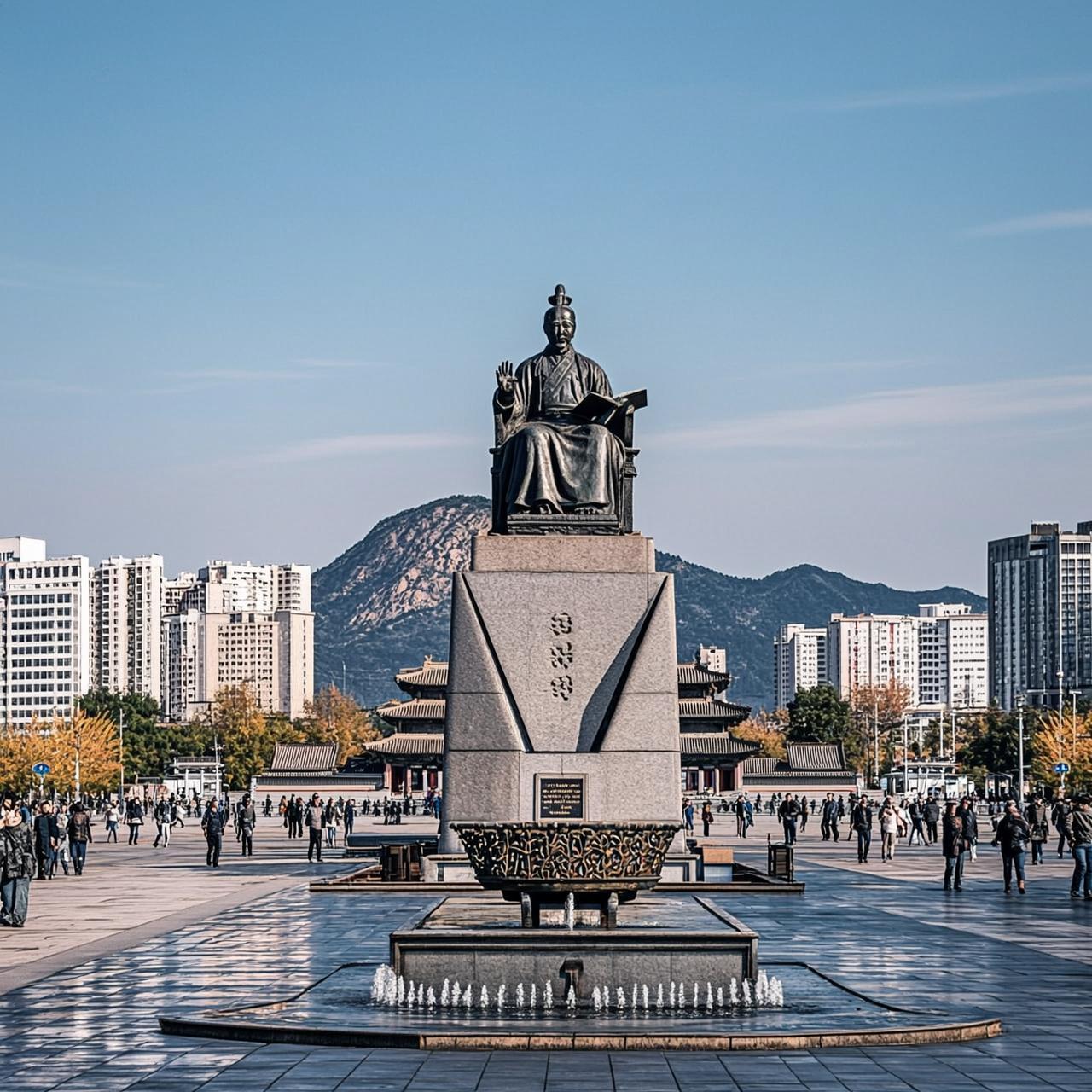
Dominating the center of the plaza is the majestic statue of King Sejong the Great. One of the most revered figures in Korean history, King Sejong is celebrated for his numerous accomplishments, the most famous of which is the invention of Hangeul, the Korean alphabet. The statue is impressive, but what lies beneath is even more intriguing. A small museum located underground, known as the The Story of King Sejong, offers a deep dive into his life and scientific achievements. It is a must-visit for anyone wanting to understand the intellectual heritage of Korea.
2. The Statue of Admiral Yi Sun-sin
Towards the rear of the square stands the statue of Admiral Yi Sun-sin, the legendary naval commander famous for his victories against the Japanese navy during the Imjin War. His statue faces the Gwanghwamun Gate, symbolizing his protective gaze over the nation. Near this statue, you will find an underwater fountain and a stone monument known as the Haechi Madang, featuring the Haechi, a mythical unicorn lion that serves as the symbol of Seoul.
The Atmosphere and Cultural Significance
Walking through Gwanghwamun Square is a sensory experience. The ground is paved with smooth stone, featuring the 'Stream of History,' a waterway that flows symbolically from the palace gate down towards the city center. It is a place of constant activity.
On weekends, the square transforms into a cultural hub. You might encounter locals participating in traditional archery, street performances, or large-scale protests and public events. It is a space where democracy breathes. Because of its central location and broad open space, it is the primary venue for celebrations, festivals, and public gatherings. If you are visiting in the spring or autumn, the weather is perfect for strolling, and the views of the surrounding mountains, Bugaksan and Naksan, provide a stunning backdrop to the cityscape.
Practical Tips for Visiting
To make the most of your visit to Gwanghwamun Square, keep these practical tips in mind:
- Getting There: The square is easily accessible via public transportation. The nearest subway station is Gwanghwamun Station (Line 5), Exit 5 or 6. You can also take Line 3 to Gyeongbokgung Station and walk straight through the palace gate to the square.
- Best Time to Visit: While the square is open 24 hours, the best time to visit is during the late afternoon. This allows you to see the square in the daylight, watch the sunset behind the palace, and see the area illuminated beautifully at night.
- Dress the Part: Since Gyeongbokgung Palace is right next door, many tourists choose to rent a Hanbok (traditional Korean clothing) from one of the many rental shops nearby. Wearing a Hanbok often grants you free entry to the palace, and it makes for incredible photos against the backdrop of the square and the statues.
- Combine with Nearby Attractions: Don't limit yourself to just the square. After exploring the statues, visit the Gyeongbokgung Palace, the National Folk Museum of Korea, and the Cheonggyecheon Stream, which is just a short walk away. These attractions are all within walking distance and can easily fill a full day of sightseeing.
Why It Is Trending Now
Recently, there has been a surge in interest in Gwanghwamun Square on search engines. This renewed attention is likely due to the global rise of 'Hallyu' or the Korean Wave. As international travel resumes and fans of K-dramas and K-pop flock to Seoul, locations featured in popular media gain massive traction. Gwanghwamun Square has been the backdrop for numerous historical dramas and is frequently featured in travel vlogs by top influencers. Its blend of historical grandeur and modern accessibility makes it an Instagram-worthy spot that appeals to the current generation of travelers seeking authentic experiences.
Furthermore, the square's role as a center for civic engagement and cultural events keeps it relevant. Whether it is a stunning light show, a traditional market, or a seasonal flower festival, there is always something new happening here. This dynamic nature ensures that it remains a top search result for anyone planning a trip to the Korean capital.
Conclusion
Gwanghwamun Square is more than just a tourist attraction; it is the soul of Seoul. It represents the resilience of Korean history and the vibrant energy of its future. From the inspiring statues of King Sejong and Admiral Yi Sun-sin to the breathtaking views of the palace, every corner of the square tells a story.
If you are looking for a place that captures the essence of South Korea, look no further than this magnificent plaza. Whether you are tracing the steps of ancient kings or simply enjoying a leisurely afternoon in the city, Gwanghwamun Square promises an unforgettable experience that will resonate with you long after you have returned home.